Industry Knowledge
4
min read
Share
If your product travels through a supply chain, ASTM D4169 is one of the most important packaging tests you can run. It is the standard practice used to recreate the shocks, vibration, compression, and environmental stresses a shipment encounters between your dock and the customer’s door.
This guide explains what ASTM D4169 requires and how to choose the right test program for your product.
What Is ASTM D4169?
ASTM D4169 is a packaging testing standard developed by ASTM International that evaluates how shipping units and packaging systems perform during distribution.
The standard is designed to simulate real transportation and handling hazards including:
Vibration
Compression
Impact and drops
Temperature and humidity exposure
Truck, rail, and air transportation conditions
Rather than prescribing one fixed test, it provides a uniform framework for evaluating whether a shipping unit can survive its real distribution environment by subjecting it to a planned sequence of anticipated hazard elements.
Because ASTM is an FDA-recognized consensus standard, ASTM D4169 is especially common in regulated industries such as medical device and pharmaceutical packaging. It is equally valuable for industrial, consumer, and e-commerce products that move through demanding distribution networks.
How ASTM D4169 Testing Works: A Step-by-Step Look
A properly executed ASTM D4169 program follows a defined sequence. Understanding it helps you scope testing accurately and avoid paying for tests your product does not need.
Select the distribution cycle (DC). ASTM D4169 defines 18 distribution cycles, organized by mode of transport rather than by product type. You choose the DC that mirrors how your product actually ships: small parcel, less-than-truckload freight, truck/rail combinations, air, or specialized cycles. For example, the common small-parcel cycle reflects the UPS/FedEx handling that most e-commerce products experience.
Set the assurance level (AL). The assurance level controls test intensity based on product value, fragility, and the consequences of failure.
Build the test schedule sequence. The DC and AL produce a sequence of test schedules: manual handling, vehicle stacking and compression, vibration, low-pressure/altitude, concentrated impact, and others as applicable. Each schedule references the underlying ASTM test method for execution.
Define acceptance criteria. Before testing, the team defines what constitutes a “pass” (e.g., no product damage, package integrity maintained, sterile barrier intact, function preserved, etc.)
Run the sequence on the same unit. Critically, the tests are performed sequentially on the same shipping unit, which remains unopened until the full sequence is complete. This cumulative exposure is what makes the result representative of a real distribution journey rather than a series of isolated tests.
What Types of Tests Are Included in ASTM D4169?
ASTM D4169 includes a combination of tests designed to simulate transportation and storage stresses.
Drop and Impact Testing
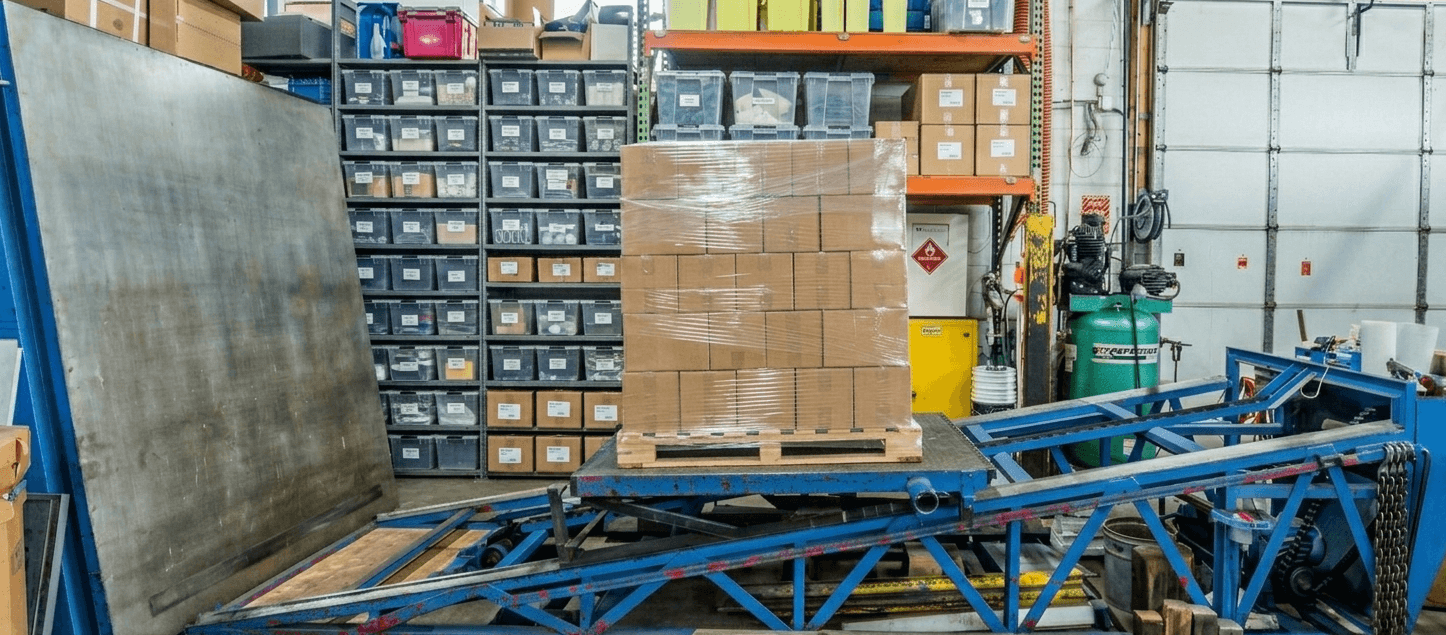
Controlled free-fall drops simulate the handling events a package experiences during manual and automated handling, typically executed per ASTM D5276. Lighter, easily handled parcels are dropped from greater heights than heavy industrial units. Concentrated and incline/horizontal impacts address specific hazards such as rail-car switching.
Compression Testing
Compression testing (commonly per ASTM D642) evaluates how a package withstands the stacking loads imposed during warehouse storage and stacked transit (frequent causes of crushed corners and collapsed cartons).
Vibration Testing
Random vibration testing (per ASTM D4728) reproduces the vibration profiles of truck, rail, and air transport. It exposes product shifting, fastener loosening, cushioning breakdown, and structural fatigue that constant-frequency testing can miss.
Environmental Conditioning
Temperature and humidity conditioning (per ASTM D4332) preconditions samples to a defined climate before testing, since corrugated strength and material behavior change significantly with moisture and temperature. Specific distribution cycles can add high-altitude/low-pressure exposure to simulate air transport.
ASTM D4169 Assurance Levels
One unique aspect of ASTM D4169 is its use of assurance levels.
Assurance levels allow companies to determine how rigorous testing should be based on product risk, value, and distribution complexity.
Level I provides the highest level of test intensity. Typically used for fragile, high-value, or mission-critical products where failure carries major financial or safety consequences
Level II represents moderate intensity. The most commonly applied level for typical distribution conditions
Level III represents lower intensity for less demanding environments, typical for lower risk products
This flexibility allows ASTM D4169 to be adapted for a wide range of industries and shipping scenarios.
Why ASTM D4169 Testing Matters
Packaging failures can become expensive quickly.
Damaged products, returns, retailer chargebacks, shipping delays, and customer dissatisfaction all add cost and risk to the supply chain.
ASTM D4169 helps companies identify packaging weaknesses before products reach customers by simulating real transportation conditions in a controlled testing environment.
This allows teams to:
Improve packaging performance
Reduce damage rates
Validate packaging designs
Support supply chain reliability
Increase confidence before product launch
For many companies, testing is not just about compliance. It is about reducing risk and improving long-term packaging performance.
How Gaynes Labs Supports ASTM D4169 Testing
Gaynes Labs helps companies evaluate packaging performance through customized distribution testing programs aligned with ASTM D4169 requirements.
By understanding your product, packaging system, and transportation environment, Gaynes can help determine the right testing approach for your application.
Whether you are validating a new packaging design or evaluating an existing system, testing provides valuable insight into how packaging performs under real-world distribution conditions.
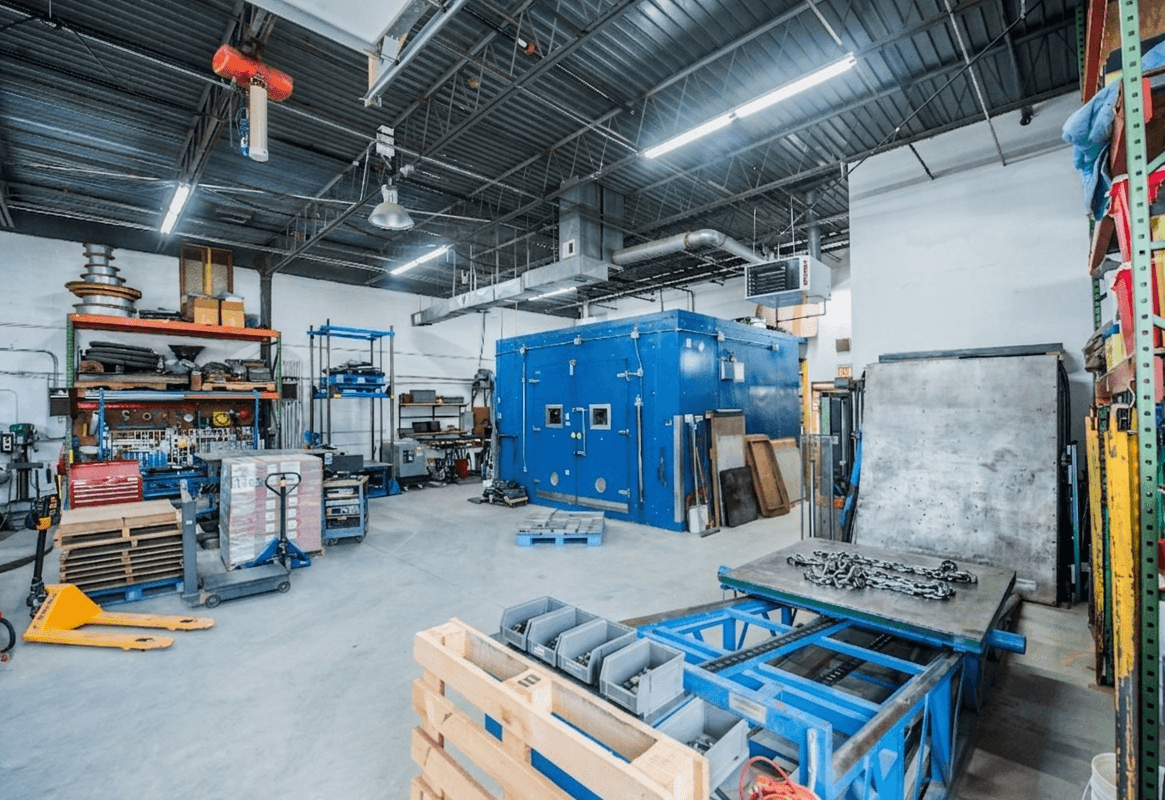
Gaynes Labs is an independent, third-party package testing lab in the Midwest, delivering testing excellence for several decades. As an ASTM member, Gaynes is positioned to build the exact test plan your product needs.
ASTM D4169 demands a lab that can run an entire test sequence on one unit, in the right order, under accredited conditions. Gaynes performs the full range under one roof:
Compression and package testing for stacking and warehouse loads
Transit and distribution testing to simulate the full distribution cycle
Vibration testing on calibrated random-vibration tables
Drop and impact testing, including incline-impact capability
Environmental conditioning in controlled temperature and humidity chambers
If your organization is evaluating packaging performance or distribution testing requirements, Gaynes Labs can help.
Contact Gaynes Labs at sales@gaynestesting.com to discuss your packaging testing needs.
Learn more about ASTM D4169 testing and distribution packaging validation at www.gaynestesting.com.
Frequently Asked Questions About ASTM D4169
What is ASTM D4169?
ASTM D4169 is the Standard Practice for Performance Testing of Shipping Containers and Systems. It provides a framework for simulating real distribution hazards by running a planned sequence of tests on a shipping unit to confirm it can survive its supply chain.
What is the difference between ASTM D4169 and ISTA testing?
Both are recognized package-testing standards, but they work differently. ASTM publishes the underlying test methods and the flexible D4169 framework, which an engineer customizes to a product’s specific distribution cycle. ISTA publishes fixed, prescriptive protocols (such as ISTA 3A or ISTA 6-Amazon) that are followed exactly and are commonly required by retailers and carriers. ISTA procedures often reference ASTM test methods, and many companies use both.
What are the assurance levels in ASTM D4169?
ASTM D4169 defines three assurance levels. Level I is the most severe and conservative; Level II is the default level recommended by the standard and the most commonly used; Level III is the least severe, for lower-risk products. The level is chosen based on product value, fragility, and the consequences of failure.
What is a distribution cycle in ASTM D4169?
A distribution cycle (DC) is the sequence of hazards a package experiences based on how it ships. ASTM D4169 defines 18 distribution cycles organized by mode of transport — small parcel, truck, rail, air, and combinations. Selecting the DC that matches your actual shipping route is the first step in designing the test.
Do I need ASTM D4169 or ISTA testing?
It depends on your goal. Choose ISTA when a specific customer or platform (such as Amazon or Sam’s Club) requires a named certification. ASTM D4169 can often be a good choice when you want engineering validation tailored to a unique or complex distribution path, or when you operate in a regulated industry. When in doubt, an experienced lab, like Gaynes Labs, can recommend the right approach.